(Image source from: Business-standard.com)
When the ride-hailing company Uber revealed that female drivers and passengers in the United States could now ask for rides only with other women, this decision was seen as a response to a long-time need for safety and comfort. The new feature, named "Women Preferences," enables female riders to select women drivers and allows women driving for Uber to opt to take female passengers. The company mentioned that a trial program conducted last year showed that women felt "more at ease in the back seat" and "more empowered behind the wheel. " About one-fifth of Uber’s drivers in the US are women, although this number can vary greatly from one city to another. This feature gives women the option to book rides ahead of time with women drivers or to change their app settings to improve their chances of being paired with one. In cities with accounts for teenagers, both teens and their parents can also ask for women drivers.
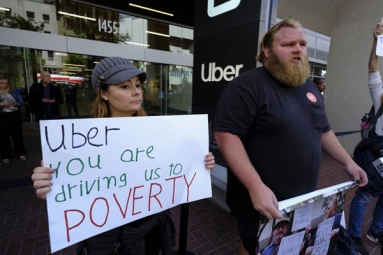
However, this rollout has sparked some controversy. Two drivers in California have initiated legal action claiming that the feature is biased against men and breaches the state’s Unruh Civil Rights Act. Uber has denied these allegations, stating that the policy supports "a strong and acknowledged public policy interest in improving safety. " At the same time, competing ride-hailing service Lyft is also dealing with a discrimination lawsuit over a similar feature launched in 2024 that allows users to focus on matching with women and non-binary individuals.
This discussion has revived an ongoing question worldwide: do ride options exclusively for women actually enhance safety, or are they merely a temporary fix for deeper issues? For many women, particularly in nations like India, the answer is not straightforward.
Geetanjali, a 24-year-old professional living in Hyderabad, finds the concept of women-only taxis comforting in theory, but asserts that safety issues run much deeper. "Whenever I have to take an early flight, I really feel uneasy getting late-night rides with male drivers. I have to stay alert at all times," she explains. "But if they are rolling out women-only taxis, it shouldn't compromise the safety of women drivers. Unfortunately, India cannot reach equality regarding women-only taxis until we ensure women's safety and enforce strict regulations for both the driver and the passenger," she remarks. Her worry also highlights dissatisfaction with safety systems that appear effective on paper but often fail in practice. "I saw a video that showed the safety alarm in the taxi doesn’t even work, regardless of how much you press it. This is the reality of taxis. I still cannot put my trust in cab services like Uber regarding safety unless immediate and severe measures are taken against wrongdoers. "
The video Geetanjali mentioned was from February 2026 in Mumbai, in which a taxi driver showcases that the vehicle's SOS safety button does not activate any prompt response, causing great concern about passenger safety in India.
Shared by Rohit Rathaur, an NRI located in Dubai, the video shows a driver describing the red SOS button's function for emergencies, mainly for women, before he presses it multiple times to demonstrate a lack of response from either the police or the company. He mentions that he once pressed it all night "just for fun" and did not receive a call until 6 AM the following morning. The recording does not show any sound alerts or prompt reactions.
Even with worries about safety, ride-hailing has become an essential mode of transportation for women in various Indian cities. Statistics indicate a strong demand: A 2023 survey by Ola revealed that 75% of women rely on ride-hailing services for work-related travel because they view them as safer than other forms of transportation. Approximately 82% mention that the ability to travel at any time is a key factor. The financial impact is also significant. Research projects that more secure and accessible ride-hailing could include between 320,000 and 560,000 additional women in the workforce in India’s five biggest cities by 2028, boosting female participation in the labor force by as much as 6.9%.
However, there is still a notable shortfall in the number of female drivers. Women represent only about 1-5% (and some say even less than 1%) of drivers across most ride-hailing services in India, showcasing the industry's continued male dominance. This is partly why women-only taxi services are emerging in certain regions of the country. Unlike the larger operations like Uber or Ola, India’s women-only ride services usually operate on a smaller scale, focusing on specific cities. An example is Fery Rides, which started in 2023 in Gurugram. This platform claims to be India’s first all-electric transport service led by women. Fery provides scooter taxis, cab rides, rentals, and pre-scheduled trips, all driven by verified female drivers known as "Sister Partners. " The service offers set rates without surge pricing, in-vehicle cameras, real-time tracking, and thorough driver verification. Although it currently serves only Gurugram, the platform has completed over 40,000 rides and created more than 200 job opportunities for women drivers.
Another project is Saheli, designed for female passengers and drivers. It provides cab and scooter rides aimed at daily travel, errands, and night rides. Though it has not yet launched, it plans to grow substantially, with goals to support over one million women travelers using around 50,000 female drivers. Then there is She Scooty, a two-wheeler taxi service in Jalandhar, Punjab. This platform connects women travelers with trained female riders for direct transport for work, classes, or errands. Like many other similar initiatives, She Scooty focuses on thorough driver checks, safety measures, and real-time bookings using an app.
India also has older services like Sakha Cabs, which offers women-driven taxi rides in places such as Delhi, although bookings are usually made through phone calls or messaging rather than through large ride-hailing platforms. Nevertheless, these services are generally smaller than Ola, Uber, or Rapido, often operating in a few major metro areas with strong safety standards but variable availability at this time.